


Submitting an application to the Palladium Global Science Award: Insights for prospective candidates
Published on 5 June 2026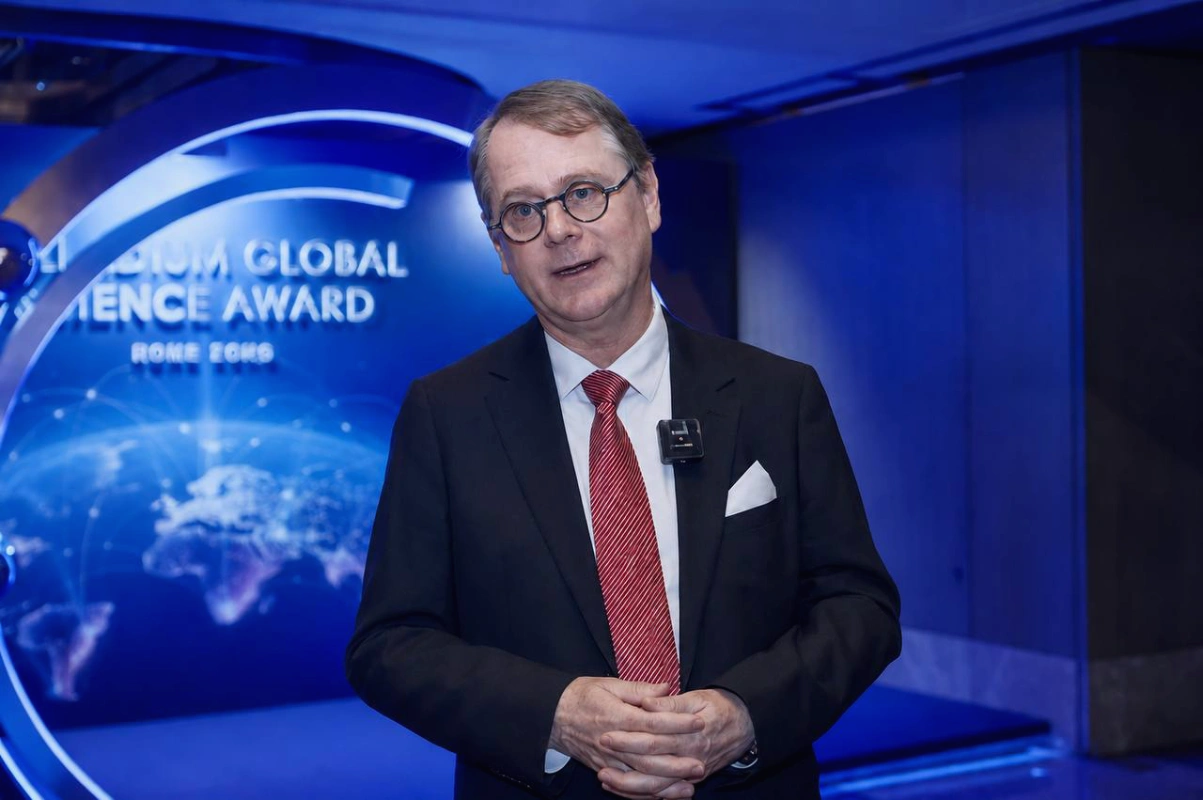
Submissions are open for the second edition of the Palladium Global Science Award. Candidates have until 31 July to submit their proposals for novel palladium applications in one of the three competition nominations: Best Scientific Development, Best Scientific Article and Best Applied Concept. We recently published a step-by-step guide on how to decide which nomination best fits your research and put together your application. We’ve now teamed up with Chair of the International Expert Council Professor Francis Verpoort to provide some more insight into what the jury is looking for, and what you can do to strengthen your candidacy.
As part of the PGSA 2025 evaluation, Professor Verpoort worked closely with Council members to jointly review and evaluate submissions across a wide range of disciplines from catalysis and materials science to medicine, energy and environmental technology. Based on this hands-on experience, he has prepared a set of personal recommendations for future applicants, offering insight into what the jury pays attention to and how candidates can strengthen their submissions.
Why palladium?
The Palladium Global Science Award exists for one reason: to discover and celebrate new and meaningful ways of using palladium. This might sound straightforward, and yet it’s the single most important criterion in the process. If your project uses palladium incidentally or treats it as a routine catalyst that could easily be swapped for something else, it may not meet the award’s objectives. We are looking for submissions where palladium’s unique properties – catalytic activity, hydrogen absorption, oxidation resistance, conductivity or magnetic susceptibility – are genuinely central to your research.
Palladium cannot be a footnote in your submission – it must be the protagonist. What advantage does palladium possess that no other element could provide in the same way?
New applications matter more than incremental improvements
We receive many submissions describing a catalyst that is marginally better than an existing one, or an extension of a known reaction to a new substrate. While scientifically valid, these kinds of proposals are unlikely to stand out. The award was created in order to champion work that takes palladium somewhere it hasn’t meaningfully gone before – a new domain, a new industry, or a new way of solving a problem.
A genuinely new application in a specific niche can be far more compelling than a broad incremental advance.
Technical feasibility: Be honest and be specific
One of the most underestimated aspects of a strong submission is a clear-eyed assessment of where the work stands. Have you devised a development that can be implemented in industry? Is your work technically feasible? Is it currently limited to the laboratory? A submission that clearly acknowledges its current stage of development while showing a credible path forward can compare very favourably to one that overstates its readiness.
What matters is that you position your work accurately.
The rationale section: Your single most important pitch
Explaining the relevance of palladium to your submission is the most consequential part of the application. Why is palladium the right choice for your specific application, rather than any other element? What specific property or behaviour you are working with, and what advantages does this bring? Be as concrete and precise as possible.
Many submissions treat this as a formality. Strong submissions treat it as their central argument.
Competitive advantage: Be aware of what’s out there
When completing the competitive advantage section, it helps to have a clear picture of what similar work already exists. What does your work do that existing approaches don’t? If you claim that your proposal is entirely new, you should be confident in that claim. The strongest submissions demonstrate awareness of the field and position their work precisely in relation to it.
You do not need to be the only person working in your area – you need to clearly articulate what is new about your specific contribution.
Presentation and completeness
Make sure that your submission includes all the key documents – a rationale, article and description of the development. For the scientific article nomination in particular, the submitted article should clearly demonstrate the role of palladium and its advantage over existing alternatives. For scientific developments, the description should allow an independent reader to understand what you have built or demonstrated, how it works, and what palladium specifically contributes.
The more completely and clearly you can communicate your work, the better positioned you are for a thorough and positive evaluation.
A final word of encouragement
The Palladium Global Science Award was created because we believe palladium is a remarkable element with applications that have not yet been fully imagined. Our goal with this award is to find the people who are imagining them. If you’re working with palladium in a way you believe is genuinely new, useful and different from what already exists, please submit it.
The worst outcome is not a rejected application – the worst outcome is work that deserves recognition never being submitted at all.
On behalf of the International Expert Council, we look forward to reading your proposals, and we hope that these reflections are genuinely useful as you prepare your own applications. The 2026 edition of the Palladium Global Science Award is open to submissions until 31 July, and the $350,000 prize pool will be shared by five winners across the three nominations.